



The Book
The Teacher’s Guide to Restorative Yoga
A practical and inspiring guide to practicing and teaching Restorative Yoga with precision, depth, and care.
By Audrey Favreau, with a foreword by Lizzie Lasater.
Rooted in the legacy of B.K.S. Iyengar and Judith Hanson Lasater, this book offers a contemporary and accessible approach to Restorative Yoga for both teachers and dedicated practitioners.
Formats & Availability
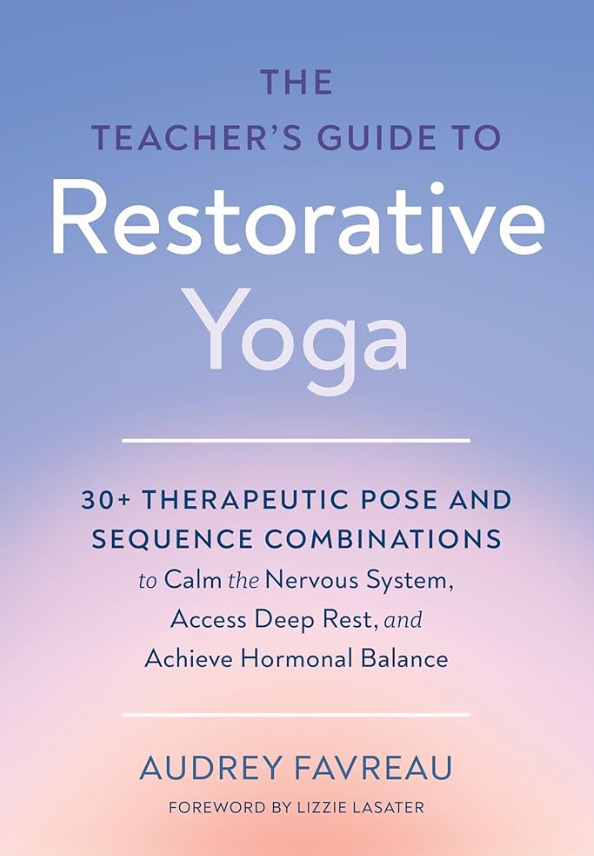
English edition
The Teacher’s Guide to Restorative Yoga, by Audrey Favreau
Where to buy
Order the book or audiobook:
- Barnes & Noble
- Bookshop.org UK
- Amazon US
- Amazon UK
- Your local bookstore
Libraries & studios: ask your bookseller or distributor.
Through carefully supported postures, thoughtful sequencing, and a deeper understanding of the nervous system, the book shows how rest can become a supportive practice.
- 30+ restorative poses with step-by-step instructions and full-color photos
- 40+ complete sequences for real-life needs and seasons of life
Inside the Book: Sample Sections
- The Physiology of Deep Rest: why it matters
- Essential Setups: backbends, forward bends, twists, inversions, side-lying, Savasana
- Breath & Awareness: lengthening exhale, interoception, gentle pranayama
- Sequences for Everyday Life: stress relief, better sleep, anger, and low energy
- Women’s Health Sequences: cycle support, fertility, endometriosis, prenatal rest, menopause
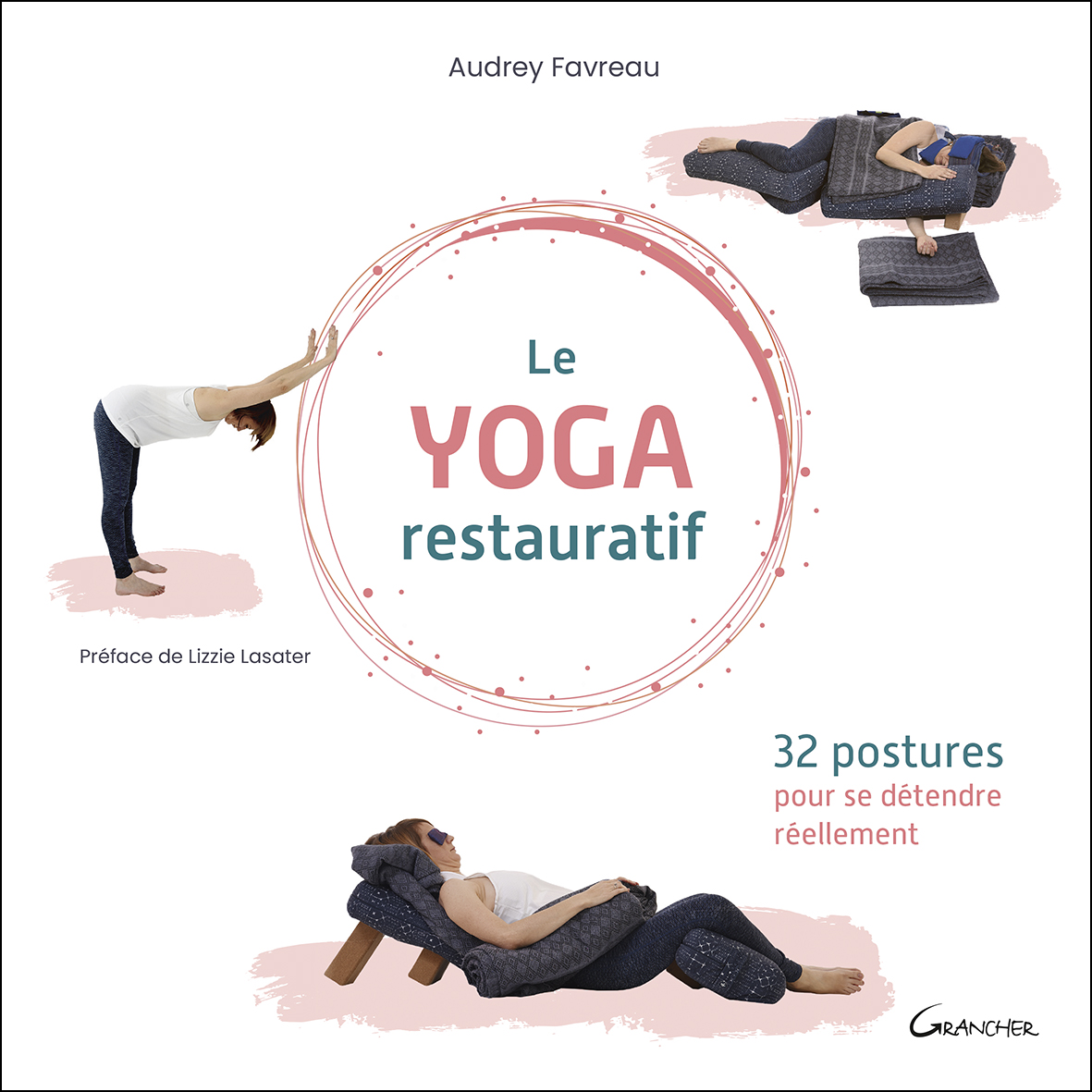
French edition
Le Yoga Restauratif, 32 postures pour se détendre réellement
Published in French as Le Yoga Restauratif, 32 postures pour se détendre réellement (Éditions Grancher, 2022)
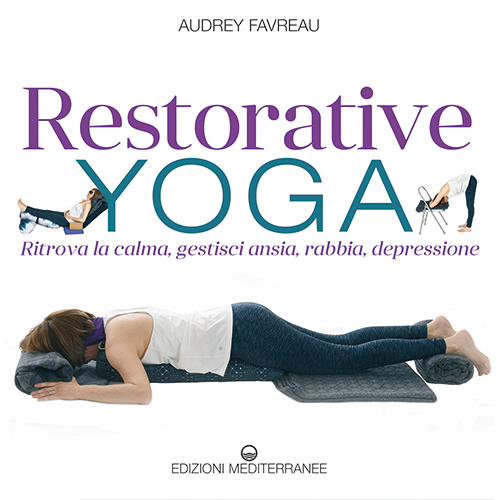
Italian edition
Restorative Yoga, ritrova la calma, gestisci ansia, rabbia, depressione
Published in Italian as Restorative Yoga, ritrova la calma, gestisci ansia, rabbia, depressione (Edizioni Mediterranee, 2021)
Also available as an audiobook
Listen to an audiobook excerpt
Experience The Teacher’s Guide to Restorative Yoga in audio, narrated by Janina Edwards.
You can listen to a sample excerpt below. This sample is not a guided relaxation, but it gives you a first experience of the tone, rhythm, and depth of the book: another way to enter the world of Restorative Yoga through listening.
Early Praise

“Not only visually beautiful, this book is an important contribution to Restorative Yoga.
With clear figures and text, Audrey Favreau shows us the inner and outer beauty of deep, conscious resting. There could not be a better time to incorporate these poses into your practice and life.”
“In a world increasingly governed by Vāta, everyone longs for calm and grounding.
Audrey Favreau’s The Teacher’s Guide of Restorative Yoga invites us to embody mindfulness through stillness and presence—compassion in action, rich in insight and rooted in lived experience.”
FAQ
Is this book for beginners or teachers?
Both. Beginners get clear step-by-step guidance; teachers will find sequencing, prop setups, and class templates ready to use.
Can I use the book to design classes?
Absolutely. The book includes 40+ sequences, timing guidance, and teaching cues to help you design Restorative Yoga classes.